
Class 1 — Explosives
Select a division to highlight it. Placard cues and representative examples are shown for quick reference.

Explore DOT hazard classes 1–9, major divisions, placards, and common materials. Search by material, UN/NA number, class, or hazard type.
A material name alone may not determine its legal shipping classification. Verify the proper shipping description using the current SDS Section 14 and 49 CFR §172.101 Hazardous Materials Table.
DOT Hazard Class Explorer
Search a material, UN/NA number, class, division, or hazard type. Matching classes and divisions are highlighted below.
Select a division to highlight it. Placard cues and representative examples are shown for quick reference.
Select a division to highlight it. Placard cues and representative examples are shown for quick reference.
Review the class details, placard cue, representative examples, and shipment-specific reference information below.
Select a division to highlight it. Placard cues and representative examples are shown for quick reference.
Select a division to highlight it. Placard cues and representative examples are shown for quick reference.
Select a division to highlight it. Placard cues and representative examples are shown for quick reference.
Review the class details, placard cue, representative examples, and shipment-specific reference information below.
Review the class details, placard cue, representative examples, and shipment-specific reference information below.
Review the class details, placard cue, representative examples, and shipment-specific reference information below.
Quick Reference
Use this table for fast orientation, then open the explorer above for divisions and material-specific notes.
| Class | Hazard type | Major divisions | Common examples |
|---|---|---|---|
| 1 | Explosives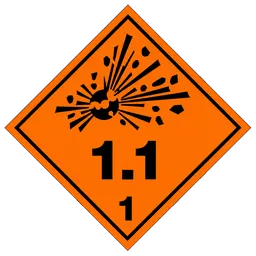 | 1.1–1.6 | Fireworks, blasting agents |
| 2 | Gases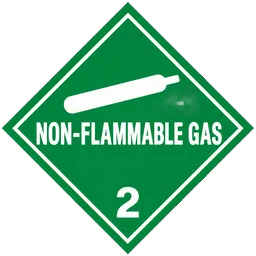 | 2.12.22.3 | Propane, nitrogen, chlorine |
| 3 | Flammable liquids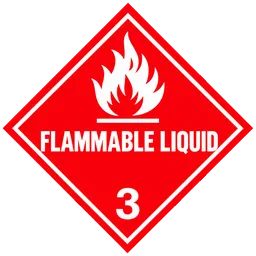 | — | Acetone, gasoline, ethanol |
| 4 | Flammable solids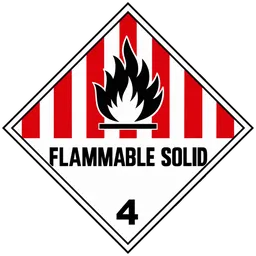 | 4.14.24.3 | Flammable solids, self-heating materials, dangerous-when-wet materials |
| 5 | Oxidizers & organic peroxides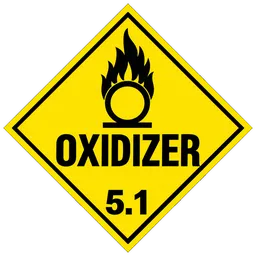 | 5.15.2 | Oxidizing substances, organic peroxides |
| 6 | Toxic & infectious substances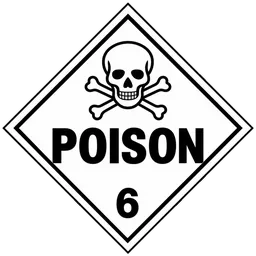 | 6.16.2 | Toxic materials, infectious substances |
| 7 | Radioactive material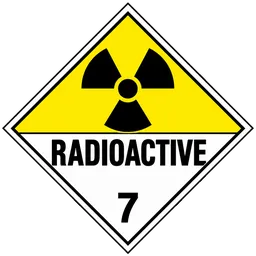 | — | Regulated radioactive materials |
| 8 | Corrosive material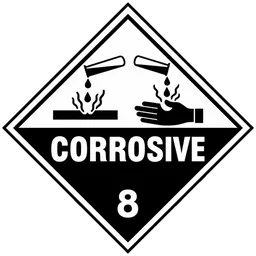 | — | Acids, corrosive liquids and solids |
| 9 | Miscellaneous hazardous material | — | Lithium batteries, dry ice |
Use this table as a fast starting point for common material searches. Some names map to a specific HMT entry, while others depend on concentration, chemistry, physical form or shipment conditions. Always verify the exact product in SDS Section 14 and the current 49 CFR §172.101 Hazardous Materials Table.
| Material | DOT hazard class / division | UN / NA or qualifier | Important note |
|---|---|---|---|
| Acetic Acid | Class 8 — Corrosive | UN2789 / UN2790 | Concentration changes the entry and packing group; stronger solutions can also carry a Class 3 subsidiary hazard. |
| Acetone | Class 3 — Flammable Liquid | UN1090 · PG II | Direct HMT entry. |
| Acetonitrile | Class 3 — Flammable Liquid | UN1648 · PG II | Direct HMT entry. |
| Ammonia / Anhydrous Ammonia | Entry depends on regulatory context | UN1005 | The HMT contains differing domestic and international entries; do not assign the class from the product name alone. |
| Ammonium Nitrate | Classification can branch | UN1942 and other entries | Composition and form matter; certain ammonium nitrate entries are Division 5.1 while others can fall in Class 1. |
| Aerosols | Division 2.1 or 2.2 — contents-dependent | UN1950 | Aerosol classification depends on the contents and hazard characteristics; verify the exact UN1950 entry and applicable provisions. |
| Asbestos | Class 9 — Miscellaneous | NA2212 / UN2212 / UN2590 | The applicable entry depends on asbestos type and transportation context. |
| Automotive Batteries | Chemistry-specific | Lead-acid and lithium entries differ | Do not treat “automotive battery” as one universal hazmat classification. |
| Benzene | Class 3 — Flammable Liquid | UN1114 · PG II | Direct HMT entry. |
| Bleach | Product-specific | Check the exact chemical and concentration | “Bleach” is a product category, not one universal DOT shipping entry. |
| Chlorine | Division 2.3 — Toxic Gas | UN1017 | The HMT also lists oxidizer and corrosive subsidiary hazards. |
| Chloroform | Division 6.1 — Toxic | UN1888 · PG III | Direct HMT entry. |
| Dangerous When Wet | Division 4.3 | Hazard type, not one material | Use the exact material entry to determine whether Division 4.3 applies. |
| Diesel Fuel | Classification can branch | UN1202 / NA1993 may be relevant | Flash point, domestic provisions and shipment conditions can affect treatment. |
| Dry Ice | Class 9 — Miscellaneous | UN1845 | Listed as Carbon dioxide, solid or Dry ice. |
| Ethanol / Ethyl Alcohol | Class 3 — Flammable Liquid | UN1170 | Packing group can vary with the applicable solution entry. |
| Ethyl Acetate | Class 3 — Flammable Liquid | UN1173 · PG II | Direct HMT entry. |
| Formaldehyde Solutions | Classification can branch | UN1198 / UN2209 may be relevant | Flammability and concentration change the applicable entry and primary hazard. |
| Gasoline | Class 3 — Flammable Liquid | UN1203 · PG II | Direct HMT entry for gasoline, including gasoline with not more than 10% ethanol. |
| Hydrochloric Acid / Muriatic Acid | Class 8 — Corrosive | UN1789 | Packing Group II or III may apply depending on the material. |
| Hydrogen Peroxide | Division 5.1 — Oxidizer | UN2984 / UN2014 / UN2015 | Concentration changes the entry, packing group and whether a Class 8 subsidiary hazard applies. |
| Isopropyl Alcohol / Isopropanol | Class 3 — Flammable Liquid | UN1219 · PG II | Direct HMT entry for Isopropanol (Isopropyl alcohol). |
| Kerosene | Class 3 — Flammable Liquid | UN1223 · PG III | Direct HMT entry. |
| Liquid Nitrogen | Division 2.2 — Non-flammable Gas | UN1977 | Listed as Nitrogen, refrigerated liquid (cryogenic liquid). |
| Lithium Batteries | Class 9 — Miscellaneous | UN3480 / UN3481 / UN3090 / UN3091 | Chemistry and whether batteries ship alone, packed with equipment or contained in equipment determine the entry. Special provisions and exceptions may apply (see 49 CFR §173.185), and requirements can differ by transport mode (ground, air, vessel). Verify the current requirements for your shipment. |
| LPG / Liquefied Petroleum Gas | Division 2.1 — Flammable Gas | UN1075 | Use the specific LPG/petroleum-gas entry rather than assuming it is identical to pure propane. |
| Magnesium | Form-dependent | Class 4.1 or 4.3 entries may apply | Powder, granules, turnings, ribbons, alloys and other forms can classify differently. |
| Methanol / Methyl Alcohol | Class 3 — Flammable Liquid | UN1230 · PG II | The international-marked HMT entry also carries a Division 6.1 subsidiary hazard. |
| Nitric Acid | Class 8 — Corrosive | UN2031 / UN2032 | Concentration and red-fuming condition can change packing group and subsidiary hazards. |
| Nitrogen | Division 2.2 — Non-flammable Gas | Compressed or refrigerated entries differ | Use the physical-state-specific HMT entry. |
| Oily Rags | Condition-dependent | May involve Division 4.2 | Do not assign a class from the phrase alone; the material condition and applicable entry matter. |
| Oxygen | Division 2.2 with oxidizer subsidiary hazard | UN1072 for compressed oxygen | Physical state matters; refrigerated liquid oxygen uses a different entry. |
| Paint | Formulation-dependent | Multiple possible HMT entries | Paints and coatings can classify differently based on formulation and physical properties. |
| Pesticides | Product-specific | Multiple classes and entries are possible | Use the exact active material/product and SDS Section 14. |
| Potassium Hydroxide | Class 8 — Corrosive | UN1813 solid / UN1814 solution | Solution entries can use Packing Group II or III. |
| Propane | Division 2.1 — Flammable Gas | UN1978 | Direct HMT entry. |
| Sodium Hydroxide | Class 8 — Corrosive | UN1823 solid / UN1824 solution | Solution entries can use Packing Group II or III. |
| Sodium Hypochlorite Solution | Class 8 — Corrosive | UN1791 · PG II or III | Concentration and product properties affect the applicable packing group; verify the exact solution in the HMT and SDS. |
| Sulfuric Acid / Battery Acid | Class 8 — Corrosive | UN1830 / UN2796; other entries exist | Concentration and fuming/spent condition change the applicable HMT entry. |
| UN3480 | Class 9 — Lithium ion batteries | UN3480 | Used for lithium ion batteries shipped as batteries rather than packed with or contained in equipment. |
| UN3481 | Class 9 — Lithium ion batteries | UN3481 | Used for lithium ion batteries packed with equipment or contained in equipment. |
Enter a material name, UN/NA number, hazard class, division, or hazard type.
The explorer opens or highlights the related class and, when useful, the matching division.
Use the expanded class reference to review divisions, placard cues, examples, and shipment-specific notes.
Material names can branch. Concentration, chemistry, physical form, and shipment conditions can change the legal shipping classification.
These identifiers answer different questions. A class describes the broad hazard; a division narrows certain classes; a UN/NA number identifies a specific regulated shipping entry. NA numbers are identification numbers used for North American transportation entries. For placarding, Table 1 materials generally require placards without the Table 2 weight exception; qualifying non-bulk Table 2 materials may use the 1,001-lb aggregate gross-weight exception for highway or rail. For non-bulk packages containing two or more Table 2 categories requiring different placards, a DANGEROUS placard may be used instead of separate Table 2 placards (§172.504(b)); this does not replace Table 1 placards, and 2,205 lb or more of one Table 2 category loaded at one facility requires that category’s own placard.
Concentration, physical state, wetting, chemistry, packaging configuration, and other details can change the applicable entry.
Use it as a starting point for transport information, not as a substitute for checking the current regulation.
Confirm the identification number, hazard class/division, packing group when assigned, and applicable special provisions.
Packaging, quantity, mode, labels, placards, marks, exceptions, and documentation can depend on the exact shipment.
Each person offering hazardous material for transportation is responsible for the applicable pre-transportation functions they perform or are required to perform, including proper classification and preparation of the shipment. Hazmat employees must be trained as required by 49 CFR Part 172, Subpart H.
Acetone is a clean example of a material with a specific commonly used HMT entry. Shipment-specific packaging, quantity, and mode requirements still need verification.
Diesel fuel is commonly associated with UN1202 and Class 3, Packing Group III, but U.S. domestic combustible-liquid provisions can affect how a shipment is treated. Bulk/non-bulk status and other shipment conditions matter.
Use the exact product data and shipment conditions before applying an exception or placarding conclusion.
The correct entry depends on battery chemistry and whether the batteries ship alone, packed with equipment, or contained in equipment. Special provisions and exceptions may apply (see 49 CFR §173.185), and requirements can differ by transport mode (ground, air, vessel). Verify the current requirements for your shipment.
“Combustible liquid” is a U.S. domestic regulatory category rather than a tenth DOT class. Materials in this category require careful review of the applicable domestic provisions and shipment configuration instead of being mapped blindly to a single class card.
This is exactly why a material-name lookup should branch rather than return one universal answer.
Division 2.1 is used for flammable gases. Propane is a common example. The exact HMT entry, identification number, packaging and quantity provisions depend on the specific gas or article.
Division 4.1 includes flammable solids and other materials covered by that division. A descriptive hazard type is not enough to establish the exact proper shipping name; verify the applicable HMT entry.
Division 5.1 covers oxidizers. Do not confuse it with Division 5.2 organic peroxides; the two divisions have different hazard characteristics and entries.
Material reference
